I've Been Doing This Since Before I Knew It Was a Skill
Study the shit you want to break into and you'll find a hole. I've been doing that for thirty years. I just didn't call it hacking.
Part 14 of an ongoing series. [Start from Part 1.]
I wrote a sentence to myself on Tuesday that I liked so much I stopped and read it twice: "Deep diving into manuals is fun and this is where exploits come from. Study the shit you want to break into and you'll find a hole."
I was sick that day, mostly, or coming off being sick. Fifteen minutes of TryHackMe, and then whatever was left of the afternoon went into manuals — not because a module told me to, but because I got pulled in. Vendor documentation, config guides, the unglamorous stuff nobody screenshots for a LinkedIn post. And somewhere in there, the hole. Not a specific one worth naming here. Just the shape of one, the thing you feel before you can point to it: this configuration option interacts badly with that default, and nobody who wrote the manual seems to have noticed.
I closed the laptop and thought: I know this feeling. I've had this feeling for thirty years.
Here's the part I didn't expect to have to relearn, thirty years into a career and one industry-swap later: I already knew how to find holes. I just found them in different material.
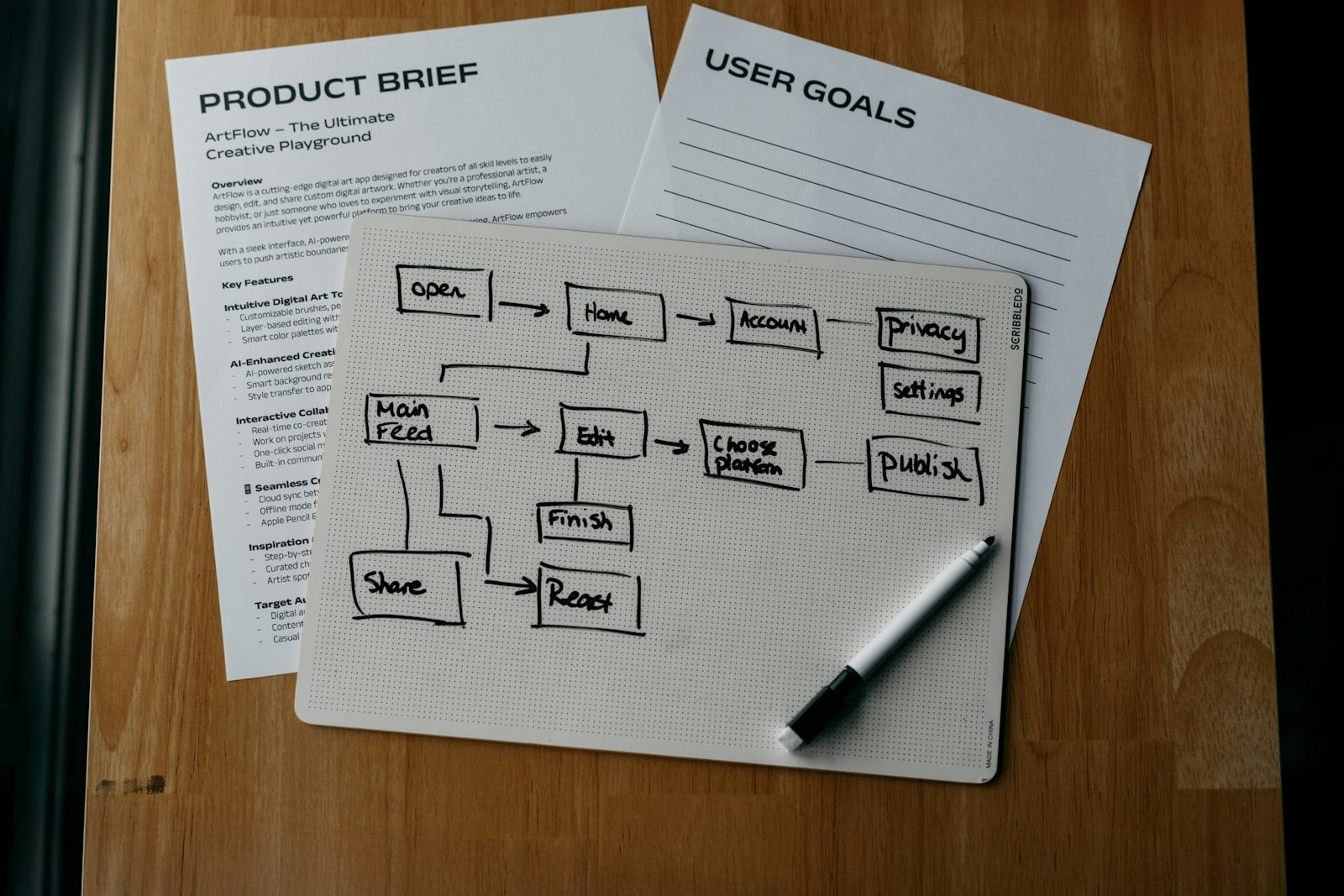
A creative brief is a manual. It tells you what the client thinks they need, in the client's own language, with their own defaults baked in — the assumptions nobody questioned because everyone in the room agreed to them months before you showed up. My entire job, for three decades, was reading that document more carefully than the person who wrote it, until I found the place where their stated need and their actual problem didn't quite line up. That gap is the campaign. That gap is the whole job. You don't get to a good idea by accepting the brief at face value. You get there by studying it the way you'd study something you intend to break into.
I never once, in thirty years, called this "finding an exploit." I called it "finding the insight," or if I was being honest in a pitch meeting, "finding the thing they didn't know they were telling us." Different vocabulary. Same motion. Read past the point where a normal person stops reading. Find the seam. Push on it.
What's strange is how long it took me to notice the overlap, given how obvious it looks written down. I think it's because the two versions of the skill showed up in such different clothes. One wore a suit and sat across from a client with a slide deck. The other wears a hoodie, metaphorically, and sits alone at 11pm with a manual open in one tab and Burp Suite in another. It didn't occur to me they were the same person doing the same thing until I wrote that sentence on Tuesday and read it back.
There's a version of this piece that turns into false modesty — "oh, it's all just pattern recognition, nothing special" — and I don't want to write that version, because it undersells both halves. Finding the gap in a brief took years to get fast at. Finding the gap in a manual is taking me months, and I'm still slow, and I still need help most of the time to confirm I've actually found something real instead of just something unfamiliar. The skill transfers. The speed doesn't, not yet. I'm rebuilding the reps from a lower altitude than I remember having.
But the instinct — go deeper into the boring part than anyone else bothered to — that part didn't need rebuilding. That part was just sitting there, unused for a decade, waiting for a manual instead of a brief.
Same day I wrote the manuals sentence, I also wrote a smaller, grumpier one: I'd asked questions and gotten no answers, and pushed ahead anyway — "I make my thing as best as I can, like I always do." I want to connect that line to this one, because I think they're the same muscle too. Nobody was going to hand me the hole in the manual. Nobody was going to hand me the answer to the question I'd asked, either. Both times, the only move available was the one I've apparently always defaulted to: keep looking, keep reading, keep pushing on the thing until it tells you something, because waiting for someone else to tell you first was never actually an option — not in a client meeting with a deadline in six hours, and not in a manual with no one on the other end of the question.
I used to think I was starting over completely when I left advertising for this. New industry, new vocabulary, new twenty-three-year-olds who know things I don't. All true. But "study the shit you want to break into and you'll find a hole" isn't a sentence I learned this year. It's a sentence I've been living for thirty years under a different name, and this week I finally read it back to myself in the version that's honest about what it actually is.
I didn't start over. I just changed what I'm reading to find the holes to fuck shit up.