I Used to Be Threatened by This Technology. Now I'm Using It to Break Into Networks.
I spent thirty years watching AI-generated copy get talked about as the thing coming for my old job. This month I enrolled in a course that hands you that same technology and points it at a target network instead.
Part 10 of an ongoing series about my journey from Creative Director to Hacker. Read part 1 here.
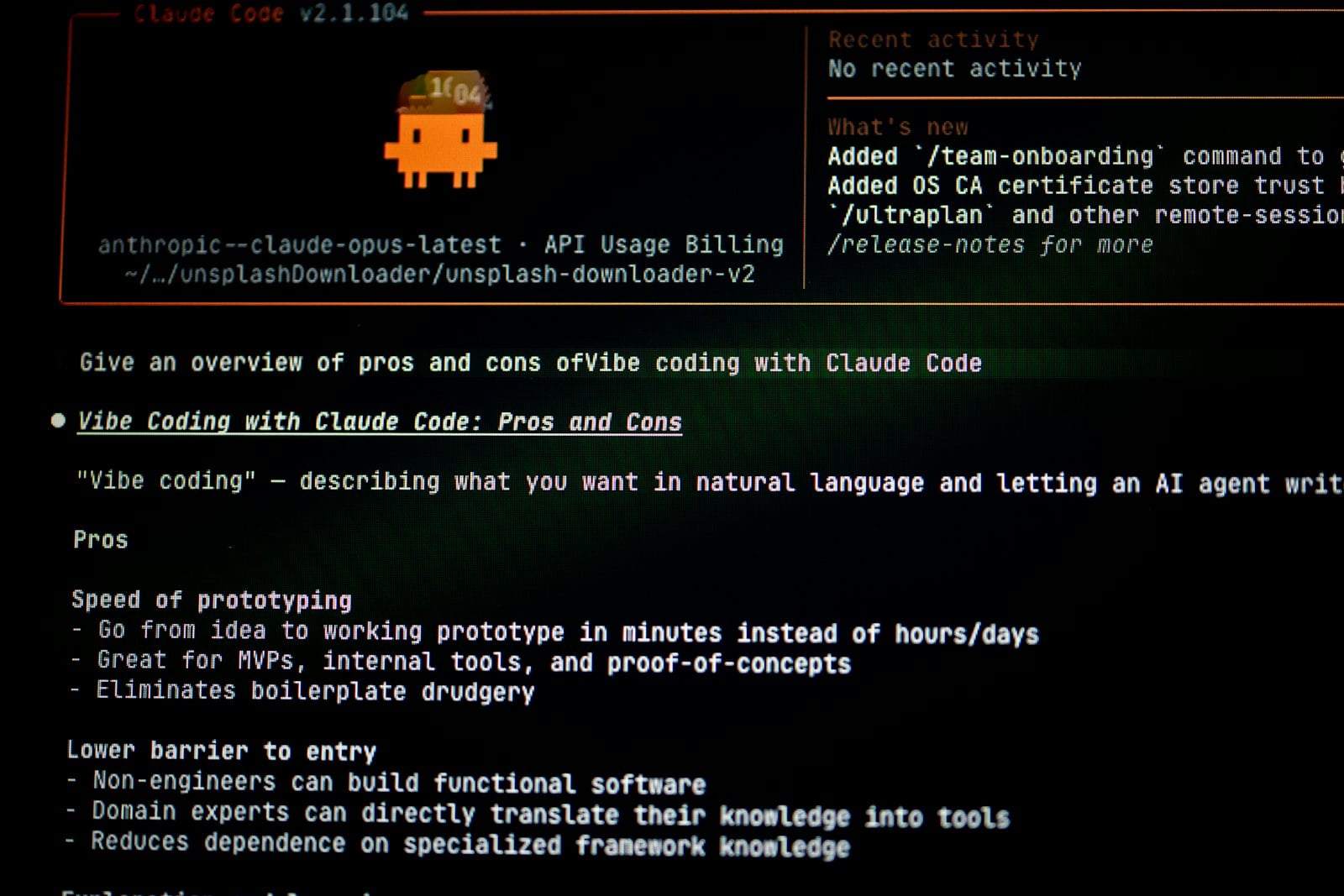
The course is called Generative AI for Penetration Testing: Red Team, on Coursera, it teaches you to use generative AI as the red teamer's tool — recon, OSINT, reconnaissance write-ups, attack-chain brainstorming, even drafting the pretext for a social-engineering angle — faster and with more coverage than doing it by hand. Attack with it. It's the new item in the kit, sitting next to Burp and nmap and whatever else is already open in the other tabs.
Here's the part that actually got under my skin, in a good way: I spent thirty years on the other side of exactly this capability.
A big chunk of what made me useful as a Creative Director was speed of synthesis — take in everything about a brand, a market, a competitor's last three campaigns, and turn it into an angle before the client's patience ran out. Before generative AI existed in any usable form, that synthesis was manual. Hours of research, pattern-matching, drafting, killing your own first three ideas because they were obvious. The advertising industry has spent the last few years nervously watching AI get fast at the exact thing I built a career being fast at.
So there's a version of me that should feel some kind of way about a tool that automates synthesis. Instead I spent this month pointing that same capability at OSINT — feeding it a target's public footprint and having it help surface the angle a human recon pass might take an extra two hours to notice. Employee names off LinkedIn, tech stack fingerprints, the phrasing a company's own job postings give away about their internal tools. The AI doesn't replace the judgment call about which thread is worth pulling. It just gets you to the pile of threads faster, the same way it would get an advertiser to a pile of headline directions faster. I know that feeling from the other side. I just didn't expect to be standing on this side of it.
There's a discipline underneath this I recognize from the old job, and I don't think it's a coincidence: you don't get anything useful out of the model by being vague with it. Same lesson I keep relearning with Claude on the daily pentest work — a loose prompt gets you a loose, generic answer, and a specific one, built like a proper creative brief, gets you something you can actually use in a chain. Target, constraint, what you already know, what you're trying to find out. I used to write briefs like that for junior designers. Now I write them for a model doing recon, and the discipline transfers almost without translation.
That's the uncomfortable, useful truth sitting at the center of this course for me: the exact skill that made AI look like a threat to my old career — knowing how to prompt something into producing convincing, targeted output fast — is the same skill that makes me faster at red teaming now. I'm not competing with the tool anymore. I'm the one holding it.
This landed the same stretch of weeks I sent my first real SOC L1 applications out the door — CV rebuilt, LinkedIn rebuilt, actually submitted instead of sitting in a drafts folder. I wrote myself a note around then: you know more than you think you know, don't get impressed by titles or positions. I needed that note walking into a course that hands you AI-assisted recon techniques while I was simultaneously trying to convince a hiring manager I belong in this field at all.
Both things are true at once. I'm junior enough here that I'm still nervous hitting submit on an application. And I'm senior enough, from thirty years in a completely different building, that "use every tool available to get to the sharp idea faster" isn't a new instinct I'm building from scratch. It's the only instinct I've ever really had. I just spent three decades pointing it at headlines, and now I'm pointing it at a target's attack surface.
The C64 kid wanted to see how systems worked so he could make them do something they weren't built for. The Creative Director spent thirty years getting faster at turning raw information into something sharp and specific. Neither of those people is gone. They're both sitting at this laptop, running a model against a recon target, looking for the angle nobody's found yet.
That's the job now. Turns out I've been training for it longer than I thought — I was just aiming the same instinct at the wrong target.
About the author
- 30 years in creative leadership (in the ad industry as a Creative Director) taught me one core skill: dissecting complex systems and finding the flaw before someone else does. My tech roots run back to 8-bit machine code on a C64 (yeah – 80s, baby!) Today, I’m combining that legacy hacker curiosity with modern threat detection and offensive security. BATTLE-TESTED LOGIC: Decades of high-pressure problem solving and systems analysis. HACKER MINDSET: I don't just follow playbooks; I reverse-engineer how the attack path actually works. CONTINOUS SKILL-UP: CompTIA Security+ certified (among other certs), building home labs, and constantly training for L1 ops to future Pentesting.
Comments
Join the discussionThe skill transfer here is the interesting part. AI changes the speed, but knowing what to ask and what to ignore still comes from the person using it.
Thanks, man!
The comparison between red-teaming an AI model and pressure-testing a creative idea is really well put. The mindset is surprisingly similar understand how something is built, question its assumptions, and deliberately look for where it can fail before the real-world consequences appear. That’s becoming increasingly important in AI marketing too. For platforms like Oglas AI, building useful AI workflows isn’t just about automation or speed; testing how those systems behave under different situations is what makes them more reliable and trustworthy.
Thank you!